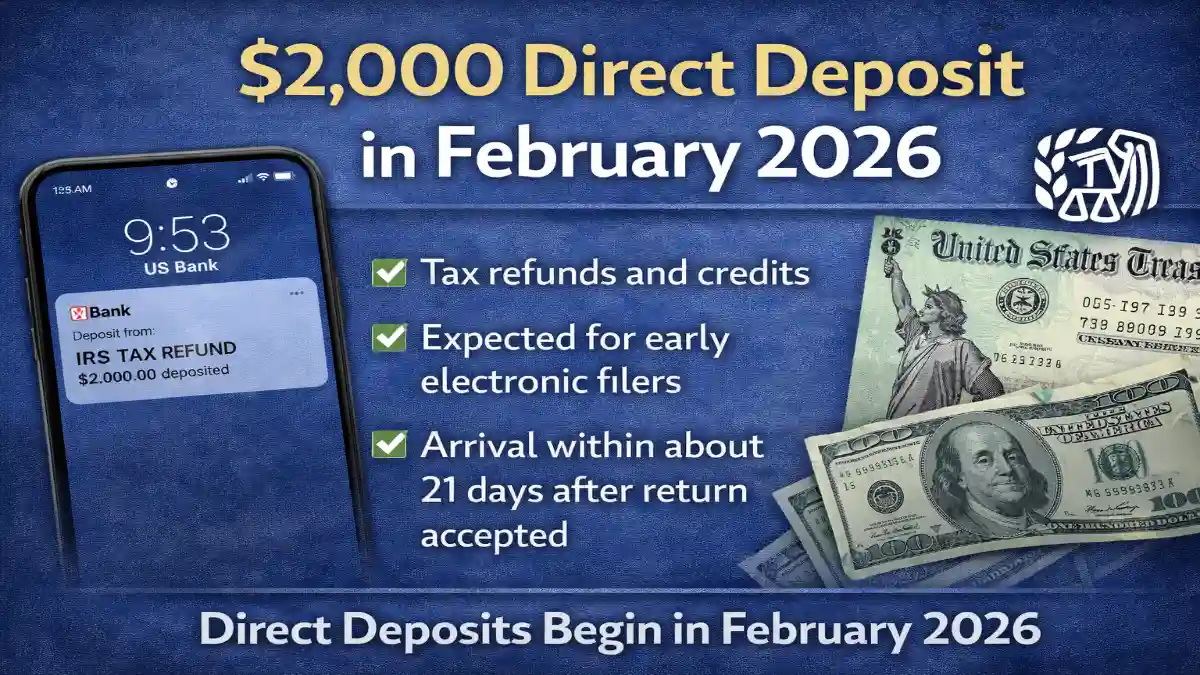
As tax season picks up momentum, many Americans are hearing talk about a $2,000 direct deposit arriving in February 2026. With social media posts, headlines, and online discussions circulating widely, it’s important to understand what this figure really represents and who may actually receive deposits around this amount.
At this time, there is no confirmed universal $2,000 federal payment issued to all residents. However, many taxpayers and benefit recipients could receive deposits close to $2,000 — depending on their individual tax filings and eligibility for credits.
This article breaks down what the $2,000 direct deposit refers to, how and when funds may be paid, and what Americans should realistically expect in February 2026.
What the $2,000 Direct Deposit Means
The $2,000 amount is not a new stimulus payment guaranteed to every American. Instead, it typically reflects tax refunds and refundable credits processed during the tax season. Some taxpayers receive refunds near this amount when their total refund — including credits — adds up to around $2,000.

Common sources contributing to refund totals include:
- Overpaid tax withheld during the year
- Earned Income Tax Credit (EITC)
- Additional Child Tax Credit (ACTC)
- Other refundable tax credits
Each person’s situation differs — so while some may get about $2,000, others may receive more or less.
When May Direct Deposits Arrive?
For most taxpayers who file electronically and choose direct deposit, refunds are usually issued within about 21 days after the IRS accepts the tax return. The Internal Revenue Service typically begins issuing refund payments in bulk once processing is underway.

In February 2026, direct deposit refunds are expected to start being released in waves, with early filers generally receiving funds first.
Why Some People See Payments Around $2,000
Tax refund amounts vary based on:
- How much tax was withheld during the year
- Income level and tax bracket
- Number of dependents
- Eligibility for refundable tax credits
For many low- and middle-income taxpayers, refundable credits like the EITC or ACTC can significantly boost refund totals, sometimes adding up to around $2,000 or more.

How to Make Refunds Arrive Sooner
Taxpayers who want the fastest possible refund should:
- File electronically rather than paper
- Choose direct deposit instead of mailed checks
- Double-check all personal and banking information
- File early in the tax season
Errors, missing documentation, and incorrect bank details can delay refund payments.
What May Delay a Refund
Even when taxpayers file early, some refunds may take longer due to:

- Identity verification requirements
- Refundable credits that need extra verification
- Mismatched income information
- Errors on the return
In such cases, refunds may be delayed into March or later.
Fact vs Rumor: What’s Really Happening
The idea of a guaranteed $2,000 direct deposit for every American in February 2026 is not confirmed by the IRS or federal agencies. Instead, the $2,000 figure often reflects a typical refund amount that some taxpayers receive based on specific financial situations.
Approaching the claim with caution and verifying information through official IRS channels helps taxpayers avoid confusion and misinformation.

Final Thoughts
While a $2,000 direct deposit is possible for many Americans as part of their tax refund, it is not a universal or automatic federal payment. Refund amounts vary widely, and deposits are based on individual tax returns, filing choices, and eligibility for refundable credits.
Staying informed and filing accurately remain the best ways to ensure timely refund deposits in February 2026.